
Abstract:
Background: The emergence of antimicrobial resistance has stimulated interest in exploring alternative and complementary approaches for controlling bacterial pathogens. Escherichia coli is a clinically important microorganism responsible for urinary tract infections, gastrointestinal infections, and other public health concerns. Although Veratrum album is a well-known homoeopathic medicine, laboratory evidence regarding its antimicrobial and antibiofilm activity remains limited.
Objective: To evaluate the in-vitro antibacterial and antibiofilm activity of Veratrum album potencies against Escherichia coli using well-diffusion, minimum inhibitory concentration (MIC), and biofilm inhibition assays.
Methods: The study was conducted using Veratrum album potencies (6C, 30C, 200C, 10M, and 50M) against E. coli. Antibacterial activity was assessed using agar well-diffusion and broth-based MIC assays. Biofilm inhibition was evaluated using a crystal violet assay. A solvent-matched 91% ethanol control was included for antimicrobial experiments to account for vehicle-related effects. Optical density measurements were used to quantify bacterial growth and biofilm formation.
Results: All tested potencies demonstrated measurable antibacterial activity in the well-diffusion assay, producing inhibition zones ranging from 2–4 mm. In MIC experiments, growth inhibition ranged approximately from 40% to 57%, exceeding that observed with the ethanol control. Antibiofilm evaluation revealed inhibition of biofilm formation, with Veratrum album 200C demonstrating the highest activity (30.78%), greater than the corresponding control. The findings indicate reproducible effects on both planktonic bacterial growth and biofilm development.
Conclusion: Veratrum album potencies demonstrated measurable antibacterial and antibiofilm activity against Escherichia coli under controlled in-vitro conditions. The inclusion of solvent controls strengthens the validity of the observations. These findings provide a foundation for future mechanistic investigations, including growth kinetics, oxidative stress, metabolic activity studies, and in-vivo validation.
Keywords: Veratrum album; Escherichia coli; Antimicrobial Activity; Biofilm Inhibition; MIC; Homoeopathy; Infectious Diseases.
Biography:
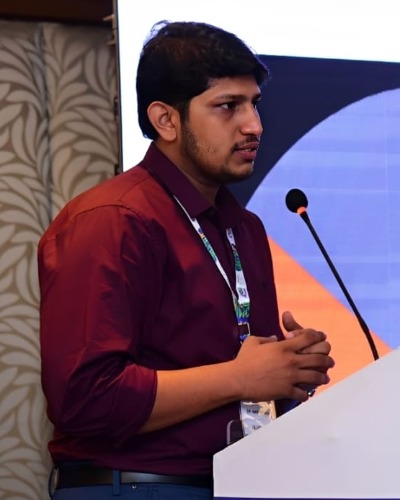
Dr. Amir Ashraf is a dedicated Homoeopathic physician with a strong clinical and academic background, known for his integrative approach to patient care and his commitment to evidence-based Homoeopathy. He completed his Bachelor of Homoeopathic Medicine and Surgery (BHMS) under the Rajiv Gandhi University of Health Sciences (RGUHS), Karnataka, India. He underwent a one-year compulsory rotating internship at the renowned Father Muller Homoeopathic Medical College, where he gained extensive hands-on training in both acute and chronic case management.
Dr.Amir Ashraf began his professional career at Ashirvad Hospital, serving in the Department of Homoeopathy, where he efficiently managed OPD and IPD cases. This experience strengthened his expertise in hospital-based integrative care, clinical diagnostics, and individualized case management.
In 2019, he founded Dr. Amir’s Family Homoeopathy Clinic, providing holistic and individualized treatment with a focus on chronic, complex, and recurrent conditions. He also serves as a Visiting Consultant at AIHMS Homoeopathy Kalpetta, Kerala, extending his clinical services and contributing to community healthcare.
© 2026 Mathews International LLC. All rights reserved.
