
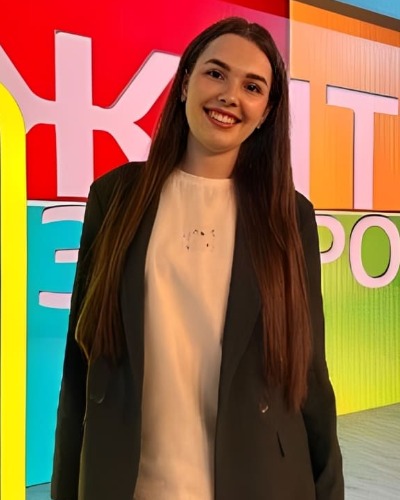
Medical Student
N.I. Pirogov Russian National Research Medical University, Russian Federation
Abstract:
Introduction: Over the past six years, the neonatal screening programme in Russia has been expanded. Against the backdrop of international experience, the issue of realising the right of the child and future adult not to know has become particularly pressing. The pace of technological progress is outstripping legal regulation and the psychological support available to parents of children with genetic disorders.
Aim of the study: To assess how the expansion of neonatal genetic screening in the Russian Federation exacerbates the conflict between clinical benefit and the right not to know, and, drawing on international experience, to justify the parameters of a phased model for the disclosure of genetic information.
Materials and methods: An analysis was conducted of 43 sources, including studies, reviews and guidelines covering the period 2020–2026.
Results: Analysis of data from the Russian Ministry of Health and federal centres showed that following the expansion of the list of conditions included in the neonatal screening programme from 5 to 38 nosologies, the detection rate of inherited disorders in Russia is 1 case per 1,875 newborns; however, in a number of regional programmes that include additional conditions, the rate of suspected inherited metabolic disorders reaches 1:180.5. Furthermore, for a number of conditions (spinal muscular atrophy, certain organic acidemias, etc.), the early initiation of specific treatment significantly reduces the risk of severe disability and mortality, demonstrating the high clinical and socio-economic effectiveness of expanded newborn screening. International programmes show that clinically significant variants associated with childhood diseases are identified in 5–10 per cent of newborns, whilst risks of adult-onset diseases are detected in 3–5 per cent, and variants of undetermined clinical significance (VUS) are recorded in a significant proportion of newborns, the proportion of which varies considerably depending on the gene and the analytical method. The first Russian pilot projects using targeted and whole-exome sequencing demonstrate a similar trend: a significant proportion of results require re-interpretation, whilst up to a third are revised as databases are updated. International psychological studies report that 10–30 per cent of parents experience a sustained increase in anxiety after receiving newborn screening results. Russian studies show a qualitatively similar picture; however, according to doctors’ assessments, only about a third of parents are considered sufficiently informed when signing the consent form. Thus, the clinical benefit is accompanied by a significant psychological burden, which in Russia is exacerbated by a shortage of trained geneticists and psychologists and by the shifting of the responsibility for providing information onto paediatricians and neonatologists. An analysis of regulatory documents and ethical and legal publications has shown that the Russian model of informed consent for newborn screening remains undifferentiated. In Russia, a one-off ‘total knowledge’ model is implemented during the neonatal period, in which the parents—who are under significant informational pressure—remain the decision-makers.
Conclusions: The data obtained show that expanded neonatal genetic screening in Russia provides substantial clinical benefit and generates a significant body of genetic information. Nevertheless, Russia lags significantly behind in establishing ethical, legal and psychological counselling mechanisms, which renders the right not to know effectively unenforceable, and informed consent merely a formality rather than a substantive process.
Biography:
Anastassiya Sokolovskaya is a 3rd-year medical student at the Institute of Motherhood and Childhood, N.I. Pirogov Russian National Research Medical University (Moscow, Russia). She is passionate about paediatrics and aspires to become a paediatric specialist. Anastassiya serves as the head of the student scientific club on Medical English. Since her first year, she has actively participated in academic conferences on anatomy, history of medicine, and bioethics. She is now eager to expand her focus into clinical research. Additionally, she has been actively involved in volunteer work since her second year.
© 2026 Mathews International LLC. All rights reserved.
